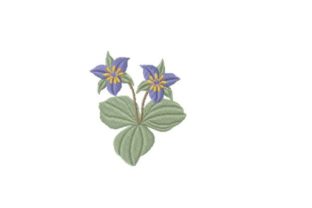
Blue Flower: A Spring Craft Fair Standout
First Impression: Soft, Elegant, and Instantly Seasonal
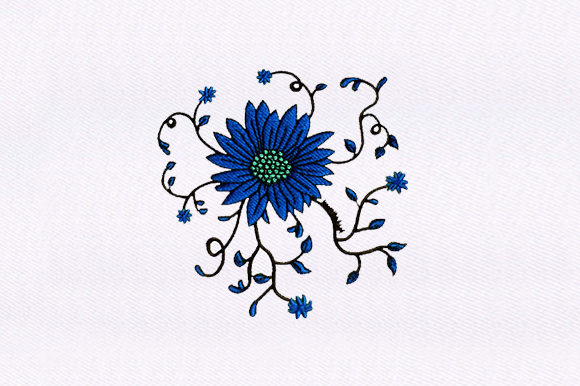
As an embroidery designer who’s prepped over 200 craft fair booths—from Portland pop-ups to Nashville maker markets—I opened Blue Flower expecting charm. What I got was quiet confidence: a single-flower design that reads as elegant but never stiff, soft but not saccharine, and undeniably spring without leaning into cliché. It doesn’t shout “Easter” or “Mother’s Day”—it whispers “fresh linen,” “morning light,” and “handmade care.” That subtlety is gold for boutique makers and Etsy sellers aiming for timeless appeal over trend-chasing.
Where Blue Flower Shines on Real Craft Fair Products
Tote bags: At 3.5–4.5 inches wide, Blue Flower anchors beautifully on the lower corner of natural canvas or linen totes—visible but not overwhelming. Customers glance, pause, then reach. It reads cleanly from 6 feet away, especially with high-contrast thread colors against light fabric.
Aprons and tea towel embroidery: This is where Blue Flower earns its keep. On aprons, it works perfectly above the pocket (centered or slightly off-center) and feels intentional—not like filler. On tea towels, it lands with farmhouse grace when stitched near the hem or corner, balancing texture without competing with woven details.
Embroidered patches and small pouches: As a standalone patch, Blue Flower holds up at 2.25 inches—no lost petals, no stitching bleed. It’s ideal for iron-on or sew-on applications on denim jackets, drawstring pouches, or gift tags. For small shop products, that versatility means one design asset powers multiple SKUs.
Pillow covers and caps: On pillow covers, it shines centered on a 16" square—elegant, uncluttered, photo-ready. On caps? Use caution: test stitch density first. The design’s gentle curves can stretch or pucker on curved surfaces unless stabilized properly. Stick to front-panel placement and avoid crowns or deep curves.
What Makes Blue Flower Sell—Beyond Pretty
It’s not just floral—it’s functional elegance. Craft fair shoppers don’t buy flowers; they buy feeling: calm, intention, seasonal joy. Blue Flower delivers that in under 5 seconds. Its clean silhouette photographs brilliantly for Etsy listings and printable mockups—no retouching needed. Light backgrounds, neutral threads (think dusty rose, sage, slate blue), and matte fabric = instant scroll-stopping clarity.
For batch production, Blue Flower is forgiving. Moderate stitch density means fewer thread breaks, less bobbin refills, and consistent results across cotton, linen blends, and medium-weight twill. It scales well: same file works as a 1.75" accent on a market bag tag or a 5" focal on a pillow cover—no redesign required.
Careful-Use Notes Every Embroiderer Should Know
- Dense areas: Petal centers and stem junctions carry moderate density—avoid ultra-thick fabrics (like heavy canvas or quilted layers) without cutaway stabilizer.
- Small details: No micro-lettering or hair-thin stems—so it stays crisp on textured tea towels and looped terry. Still, always test on your exact fabric before committing to 30+ units.
- Dark fabric: Works—but only with high-contrast thread (ivory, pale gold, or cream). Avoid pastel-on-black; it fades visually in booth lighting.
- Curved surfaces: Caps and curved pouch seams require re-hooping and careful digitizing adjustments. If your machine embroidery design wasn’t optimized for 3D surfaces, expect minor distortion.
- Small sizes: Below 1.5", petal definition blurs. Keep it ≥1.75" for patches and ≤2.5" for tags—anything smaller sacrifices handmade quality.
Design Impact: Booth Presence, Brand Voice, and Buyer Trust
Blue Flower strengthens booth display strength instantly. When grouped with neutral-toned products—cream totes, oatmeal aprons, stone-gray pillow covers—it becomes a visual anchor. Unlike busy motifs, it invites closer inspection: “Is that hand-stitched?” “What thread is that?” That engagement builds perceived value and justifies premium pricing.
For Etsy sellers and small shop owners, it supports brand consistency across categories. One embroidery file becomes your signature spring motif—on packaging, social posts, and product photography—without looking repetitive. And because it’s part of the Single Flowers category, it pairs seamlessly with other botanical designs (lavender sprigs, cherry blossoms) for curated bundles.
Pro Designer Checklist Before You Stitch
- Test the Blue Flower machine embroidery design on scrap fabric matching your final product—especially if using textured towels or dark denim.
- Check thread contrast in natural light AND booth lighting (LEDs mute pastels).
- Review spacing between elements—tight petal overlap shouldn’t trap lint or hide detail after washing.
- Confirm hoop size compatibility—some versions may require 5x7", others fit 4x4". Don’t assume.
- Inspect stitch density in petal layers—overly dense fills cause stiffness on soft fabrics like rayon-blend tea towels.
- Use appropriate stabilizer: tear-away for light cottons, cutaway for knits or heavy textures.
- Create at least one real mockup—not just a digital preview. Fabric drape changes everything.
- Compare thread colors across 3–4 fabric bases (ecru, charcoal, sage) to lock in your best combo.
- Verify commercial licensing terms—this is essential before selling finished products, especially on platforms like Etsy or at wholesale craft fairs.
Final Thought: Blue Flower Is Quiet Confidence in Thread Form
In a sea of bold fonts and maximalist florals, Blue Flower stands out by stepping back—and that’s its superpower. It doesn’t need glitter, metallics, or oversized scale to command attention. It sells because it feels considered, calm, and deeply handmade. For craft fair sellers, embroidery business owners, and creative entrepreneurs building a cohesive, sellable line, this isn’t just another embroidery file—it’s a reliable, repeatable, revenue-ready design asset. Just remember: respect the fabric, honor the thread, and always—always—test before you tote.