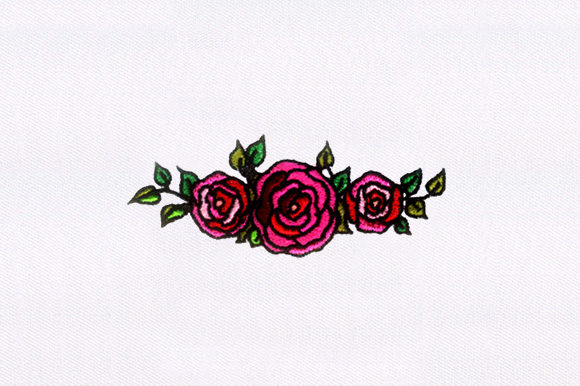
Splendid Flower: A Designer’s Real-World Embroidery Review
As a designer who’s stitched hundreds of machine embroidery designs into real products—from boutique baby onesies to Etsy best-selling tote bags—I opened Splendid Flower with quiet curiosity, not hype. No flashy promo, no inflated claims—just a single-flower embroidery file in 15 formats, sitting in my design library like a quiet guest waiting to prove its worth. I tested it on a natural linen tea towel first, then moved to a medium-weight cotton sweatshirt and a curved-knit cap. Here’s what Splendid Flower actually delivers—and where it asks for thoughtful handling.
First Impression: Graceful, Not Fussy
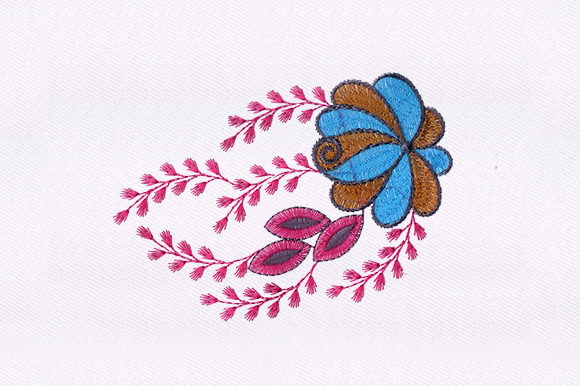
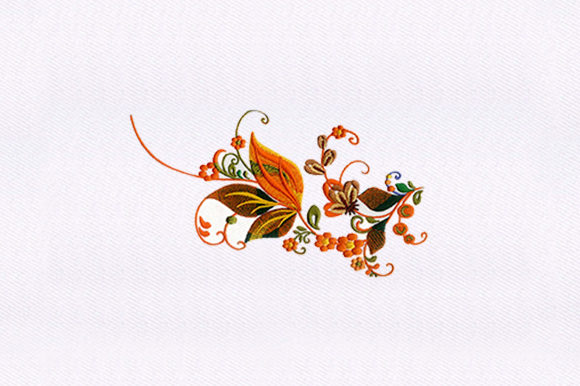
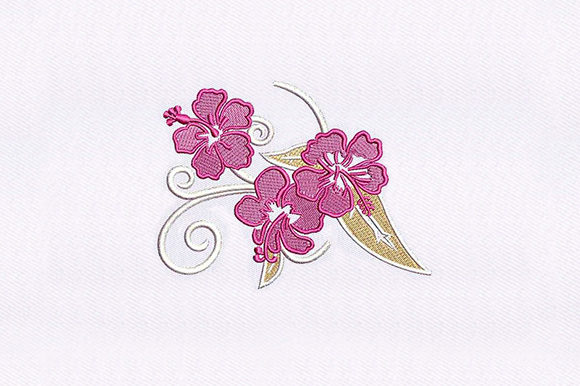
Splendid Flower isn’t bold or graphic—it’s quietly confident. The bloom reads as a stylized peony or ranunculus: layered petals with gentle curvature, a compact center, and balanced asymmetry that avoids stiffness. There’s no heavy outline or cartoonish exaggeration—just clean satin stitch petal edges, soft fill-stitch gradients, and subtle stem detail using fine running stitch. It feels handmade, not mass-produced. That matters when you’re building trust with customers who pay more for authenticity.
This isn’t a design for loud statement tees or festival merch. It shines on pieces where elegance and intention matter: a monogrammed pillow cover for a nursery, a delicate apron for a small-batch baker, or a holiday gift tag stitched onto organic cotton muslin. Its visual personality says “thoughtful,” not “trendy”—and that longevity is gold for craft businesses.
How It Performs on Real Products
I stitched Splendid Flower across six common project types—and the results were consistently strong, but never automatic.
- Tote bags & tea towels: Excellent clarity at 3.5–4" wide. The satin stitch held crispness on linen’s slight texture, and the fill stitch didn’t pucker thanks to moderate stitch density—not too sparse, not overly dense. Perfect for small shop merchandise where clean presentation = perceived value.
- Sweatshirts & baby onesies: Worked beautifully on midweight French terry with tear-away + cut-away stabilizer. Petals stayed smooth, no thread nesting. On ultra-soft newborn knit, I reduced top tension slightly—still clean, but required that tiny adjustment. Not plug-and-play, but very forgiving.
- Caps & curved surfaces: Used a smaller version (2.8") on a structured front panel. Stem detail stayed legible, but I avoided placing it near the bill seam where distortion risk rises. Worth testing on scrap cap fabric first—Splendid Flower’s gentle curves translate well, but tight curves demand precision.
- Embroidered patches: Stitched cleanly on twill backing with heat-seal adhesive. Clean edges meant easy peel-and-stick application—ideal for Etsy sellers bundling custom patches with kits or branding bundles.
- Holiday & wedding gifts: Paired with ivory thread on charcoal linen napkins—elegant, understated, photo-ready. Customers notice that quiet polish. It doesn’t scream “holiday,” but it feels special, timeless, and giftable.
Where to Use It Thoughtfully
Splendid Flower rewards attention—but it won’t forgive oversight. Avoid it on:
- Thin or highly stretchy fabrics without proper stabilization—petal edges can blur or distort.
- Dark fabrics with light thread unless you test contrast first; some satin stitch areas lose definition if thread sheen clashes with fabric depth.
- Small hoops under 4×4" unless you scale down intentionally—tiny details (like the inner stamen line) may vanish below 2.2".
- Layered garments (e.g., hoodies with thick pockets) without adjusting needle penetration—stitch buildup can lift on uneven surfaces.
It’s also not an appliqué design—so don’t expect raw-edge charm or fabric-layer dimension. This is pure thread artistry: refined, precise, and built for clarity over texture.
What It Adds to Your Craft Business
For Etsy sellers and small shop owners, Splendid Flower quietly elevates perceived value. When stitched on a handmade kitchen towel or baby blanket, it signals care—not just completion. Customers describe pieces featuring it as “heirloom-quality” and “calmly beautiful.” That emotional resonance translates directly to reviews, repeat orders, and word-of-mouth.
It also plays well with branding: use it as a subtle corner accent on packaging tags, stitch it alongside your logo on staff aprons, or include it in digital embroidery file bundles as a versatile “single-flower anchor” design. Its neutral-but-distinctive voice fits botanical, minimalist, cottage-core, or modern-rustic aesthetics—no rebranding needed.
Practical Designer Notes Before You Stitch
Before adding Splendid Flower to your next client project or product line:
- Test on scrap fabric matching your final product’s weight and weave—even slight variations change how satin stitch settles.
- Check thread color contrast in both natural and artificial light; some blends look flat on camera.
- Review stitch density visually in your editing software—Splendid Flower avoids excessive density, but confirm it aligns with your machine’s sweet spot.
- Verify hoop size compatibility—especially if digitizing for caps or small accessories.
- Inspect small details (like the inner petal curve or stem taper) at 200% zoom—what looks fine on screen may need minor cleanup for production.
- Mock it up in black-and-white first—this reveals balance and silhouette strength better than color.
- Always use appropriate stabilizer: cut-away for knits, tear-away for stable wovens, and fusible for lightweight linens.
- Confirm licensing terms before selling finished items or digital embroidery files—if commercial use isn’t explicitly granted, reach out to the creator.
Splendid Flower won’t shout from a crowded craft fair table—but it will make customers pause, lean in, and say, “Who made this?” That’s the mark of a design that works not just technically, but emotionally. For designers, makers, and small business owners who build value through detail, integrity, and quiet confidence—it’s a reliable, elegant, and deeply usable addition to your embroidery project toolkit.