Butterfly Vines: A Craft Fair-Ready Embroidery Design
First Impression: Delicate, Timeless, and Unexpectedly Versatile
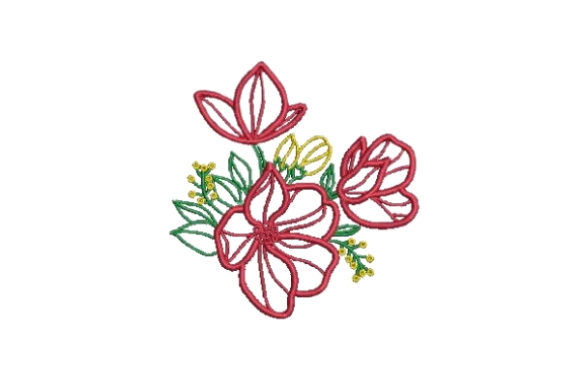
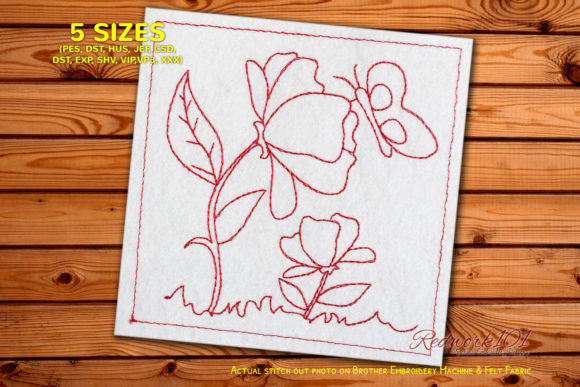
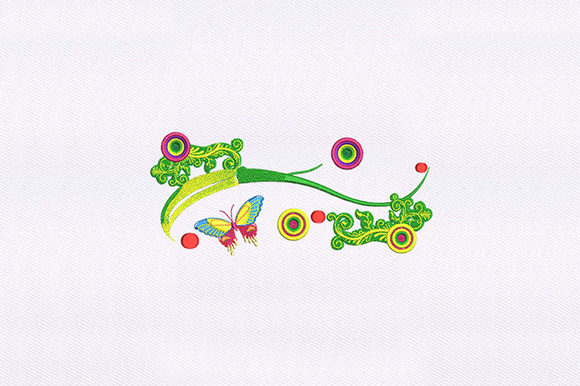
As an embroidery designer who’s prepped over 200 craft fair booths—and watched which designs stop foot traffic dead in its tracks—I opened Butterfly Vines expecting something dainty. What I found was more nuanced: a soft but confident outline floral motif that leans elegant without feeling stiff, romantic without veering into fussy, and organic without losing structure. It’s not “farmhouse” or “modern minimalist”—it lives in that sweet spot between botanical illustration and hand-drawn charm. The title alone evokes motion and growth, and the Outline Flowers category tells me this isn’t about fill-heavy density—it’s about line, flow, and breathability. That makes Butterfly Vines instantly adaptable for handmade product lines that value clarity, craftsmanship, and quiet sophistication.
Where Butterfly Vines Shines on Real Craft Fair Products
In my booth setup—tote bags stacked upright, aprons draped over a ladder shelf, tea towels folded beside embroidered patches—I test every design for visual lift at 3 feet. Butterfly Vines delivers. Here’s how it performs across key categories:
- Tote bag design: Works beautifully as a centered chest motif or along the bottom hem. Its trailing vines read clearly even at 4–5 inches wide—no blurring, no lost detail.
- Apron embroidery: Ideal for pocket corners or waistband accents. The linear nature avoids bulk while reinforcing handmade quality.
- Tea towel embroidery: Holds up against textured terry weaves when stitched with medium-weight cutaway stabilizer. The open outlines prevent puckering common with dense fills.
- Embroidered patch: Clean edges make it a strong candidate for iron-on or sew-on patches—especially when backed with twill or denim.
- Fabric pouch & pillow cover: Scales well from 2.5" to 7". At smaller sizes, the butterfly elements remain legible; at larger, the vine flow adds rhythm without overwhelming.
- Caps & curved surfaces: Proceed with caution—tight curves distort delicate outlines. Best placed on flat panels (e.g., front of structured trucker caps) rather than crowns.
What Makes Butterfly Vines a Smart Sell for Etsy Sellers & Small Shops
This isn’t just another machine embroidery design—it’s a visual anchor. On Etsy listings, Butterfly Vines photographs exceptionally well: clean lines translate crisply in natural light, and the design reads instantly in thumbnail previews. Buyers scanning dozens of digital embroidery file options will pause here—not because it’s loud, but because it feels intentional and calm. As a small shop product, it supports brand consistency across collections: pair it with neutral linens, oatmeal canvas, or indigo-dyed cotton and you’ve got cohesion without repetition. And yes—it’s repeatable for batch production. With moderate stitch density and no micro-details (like tiny antennae or vein stippling), your hoop time stays predictable, and thread changes stay minimal.
Careful-Use Notes Every Embroiderer Should Know
Even beautiful embroidery files have limits—and skipping these checks can cost you time, fabric, and booth credibility:
- Avoid ultra-dense fabrics: Thick canvas or quilted layers may compress fine outlines. Test on your exact tote bag fabric—not just muslin.
- Dark fabric demands contrast: Use bright ecru, soft sage, or buttercream thread—not black or navy—against charcoal or espresso linen. Outline motifs vanish without tonal separation.
- Small sizes need breathing room: Below 2", the butterfly forms blur into shapeless loops. Stick to ≥2.25" for patches or pouch corners.
- Textured towels require stabilization strategy: Combine tear-away *under* and lightweight cutaway *on top* to keep outlines crisp against loop pile.
- No lettering = no legibility traps: A huge plus. Since Butterfly Vines is pure motif, there’s no risk of tiny fonts disappearing on aprons or market bags.
Designer-Level Production Tips You’ll Wish You Knew Sooner
I’ve learned the hard way: never skip real-world validation before loading 50 hoops. For Butterfly Vines, here’s my non-negotiable checklist:
- Test-stitch on scrap fabric *in your actual thread colors*—not default digitized palettes.
- Confirm hoop size compatibility. This design flows horizontally—verify your largest hoop accommodates full vine length without re-hooping mid-stitch.
- Inspect stitch density in the butterfly wings and vine junctions. Some versions of outline florals pack too many short jumps—look for smooth transitions, not “stuttering.”
- Match stabilizer to end use: cutaway for totes and aprons, tear-away for tea towels, fusible web + tear-away for patches.
- Create *one physical mockup*—not just a printable mockup—before listing. Hold it in daylight. Does the flow feel balanced? Does the scale match your product’s proportions?
- Compare fabric colors side-by-side: oatmeal vs. natural linen vs. stone gray. Subtle shifts change how delicate the design appears.
- Verify commercial licensing terms. Since this is a commercial embroidery file, confirm whether resale of finished products is permitted—don’t assume.
Why Butterfly Vines Belongs in Your Next Craft Fair Lineup
At the end of the day, craft fair success comes down to three things: what catches the eye, what feels worth the price, and what invites touch. Butterfly Vines checks all three. It stands out without shouting—drawing in buyers who appreciate subtlety and skill. It elevates a $28 tote bag into a giftable handmade product because the stitching reads as considered, not automated. And it strengthens your booth display: grouped with matching tea towels and pillow covers, it creates rhythm and cohesion that signals professionalism—not hobbyist energy. For Etsy sellers building long-term design assets, Butterfly Vines isn’t just a seasonal trend—it’s a foundational machine embroidery design that scales across seasons, surfaces, and stories. Whether you’re embroidering for joy or income, this one earns its place in your working library.